
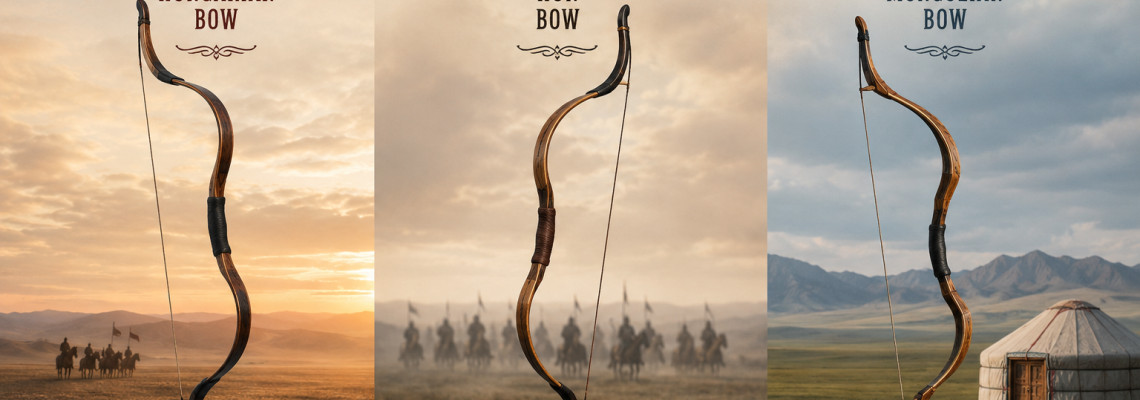
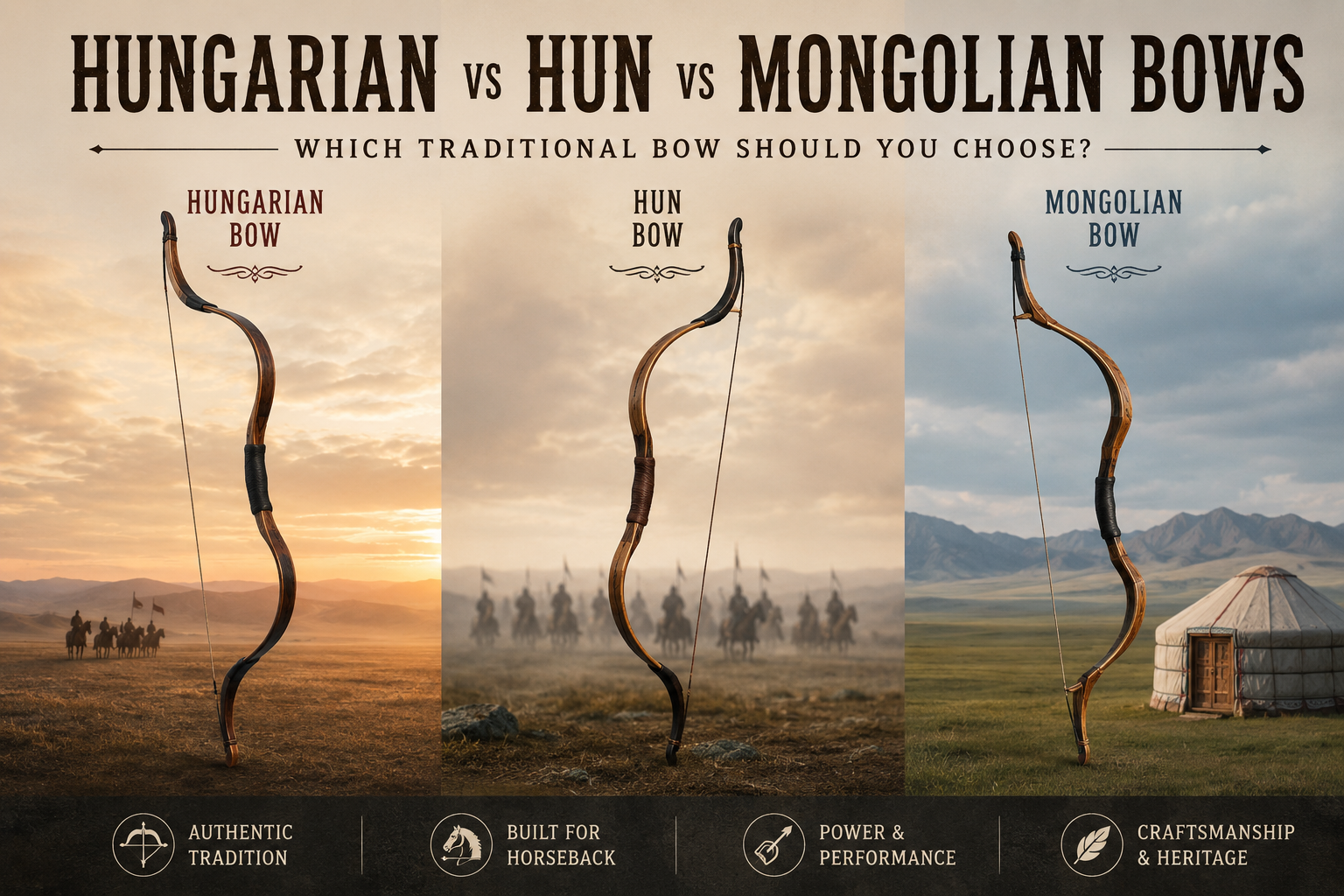
Hungarian vs Hun vs Mongolian Bows: Which Traditional Bow Should You Choose?
Introduction
Hungarian, Hun and Mongolian bows are among the best-known styles of traditional horse bows. They share a connection with the history of mounted archery, but their names, shapes and modern interpretations can make choosing between them confusing.
One important point is that these names do not describe three completely standardised technical categories. Historical bows varied across periods and regions, and modern manufacturers may interpret traditional designs in different ways. The actual construction and specifications of an individual bow are therefore more important than its label alone.
In this guide, we compare the three styles from a practical perspective to help you decide which one best suits your experience, shooting preferences and intended use.
Understanding the Differences Between Traditional Bow Styles
Traditional horse bows were developed for practical use in environments where compact equipment and effective handling were important. Their designs were influenced by local materials, manufacturing methods, military traditions and the needs of mounted archers.
Today, terms such as Hungarian, Hun and Mongolian are commonly used to identify particular traditional bow styles or product designs. However, there is no single shape or specification that applies to every bow carrying one of these names.
When comparing bows, pay attention to:
Overall bow length and shape
Limb geometry and the design of the tips
Draw weight and recommended draw length
Materials and construction
How the bow feels during the draw and release
The type of archery you intend to practise
The following descriptions explain the general character associated with each style, rather than claiming that every historical or modern example is identical.
1. Hungarian Bows
A versatile traditional design
Hungarian bows are strongly associated with the mounted archery traditions of the Carpathian Basin. Modern Hungarian-style bows are available in different lengths, draw weights and constructions, so it is important to check the specifications of each model.
Many archers are attracted to this style because it combines a distinctive traditional appearance with a practical design suitable for different forms of recreational and traditional shooting.
What to consider
Traditional character: Hungarian-style bows are a popular choice for archers interested in Central European mounted archery heritage.
Versatility: Depending on the model and its specifications, they can be used for recreational target shooting and traditional archery practice.
Individual fit: The bow's draw weight, draw length and overall dimensions should match the archer.
Who might prefer a Hungarian bow?
A Hungarian bow may be a good choice if you:
Are interested in Hungarian and Central European archery traditions
Want a traditional horse bow for general recreational use
Prefer this style's appearance and handling
Are looking for a bow that matches your draw length and preferred draw weight
Explore our range of Hungarian traditional bows.
2. Hun Bows
A style associated with the Huns and the history of steppe archery
Hun bows take their name from the Huns, a people associated with the history of the Eurasian steppe and mounted warfare. Modern Hun-style bows are inspired by historical interpretations of this tradition.
The term "Hun bow" is used in different ways by modern bow makers and sellers. It should not be treated as a guarantee of one exact historical design. The shape, proportions, materials and shooting characteristics depend on the particular model.
What to consider
Historical inspiration: This style may appeal to archers interested in the Huns and the history of steppe warfare.
Distinctive design: Modern Hun-style bows can have a visually distinctive profile, but details vary between manufacturers.
Model-specific performance: Speed, draw smoothness and comfort should be assessed from the actual bow's specifications and construction, not assumed from the name.
Who might prefer a Hun bow?
A Hun bow may suit you if you:
Have a particular interest in Hun history and steppe archery
Like the appearance of modern Hun-style designs
Want to explore a different traditional bow style
Have found a model with a suitable draw weight and draw length for your needs
Discover our Hunnish bows.
3. Mongolian Bows
A design connected with the archery traditions of Mongolia
Mongolian bows are associated with the long and varied archery traditions of Mongolia and the wider Inner Asian region. Historically, bows used in this area were not all identical. Their construction and appearance changed across periods and depended on their intended use.
Modern Mongolian-style bows draw inspiration from this heritage. As with Hungarian and Hun bows, the name alone does not tell you everything about the bow's performance.
What to consider
Historical connection: Mongolian-style bows are an appealing option for archers interested in Mongolian culture and mounted archery.
Variation in design: Different models can have different proportions, limb shapes and materials.
Practical suitability: Check the actual draw weight, draw length and manufacturer recommendations before choosing.
Who might prefer a Mongolian bow?
A Mongolian bow may be the right choice if you:
Are interested in Mongolian history and traditional archery
Prefer the appearance of Mongolian-style bows
Want a traditional bow for recreational shooting or practice
Have identified a model that suits your physical characteristics and shooting goals
Take a look at our Mongolian bows.
Quick Comparison: Hungarian vs Hun vs Mongolian Bows
The table below summarises the main points to consider. It is a practical guide to the styles, not a universal technical ranking.
| Style | Historical association | Main reason to consider it |
|---|---|---|
| Hungarian | Carpathian Basin and Central European mounted archery | Interest in Hungarian traditions and a versatile traditional design |
| Hun | Huns and the Eurasian steppe | Interest in Hun history and distinctive modern Hun-style designs |
| Mongolian | Mongolia and Inner Asian archery traditions | Interest in Mongolian culture and its traditional archery heritage |
There is no reliable rule that one of these styles is always faster, more accurate, more powerful or easier to shoot. These qualities depend on the construction and specifications of the individual bow, as well as the archer's technique.
Which Traditional Bow Is Best for Beginners?
Beginners do not need to choose a bow based on historical prestige or appearance alone. The most important factors are a manageable draw weight, a suitable draw length and a design that feels comfortable to use.
All three styles may be suitable for a beginner if the particular model matches the archer's needs.
Before buying, consider the following:
Choose a manageable draw weight. You should be able to draw and release the bow repeatedly without losing control or straining.
Check your draw length. Make sure the bow is designed to accommodate your natural draw length.
Read the model specifications. Do not assume that all bows within one style have the same draw characteristics.
Consider your intended use. Recreational target shooting, traditional practice and mounted archery may involve different requirements.
Ask for advice if needed. If you are uncertain, get help matching the bow to your experience and physical capabilities.
Our guides can help you make an informed decision: how to choose the right draw weight and how to measure your draw length.
Does the Historical Name Determine How a Bow Shoots?
Not necessarily.
The names Hungarian, Hun and Mongolian refer to historical and cultural inspirations, as well as modern design traditions. They do not guarantee a specific level of speed, accuracy, smoothness or power.
Two bows carrying the same style name can feel quite different if they have different limb geometry, materials, draw weights or dimensions. Equally, bows with different historical labels may have similar practical characteristics.
For this reason, it is best to compare the specifications of the exact models you are considering rather than relying only on the style name.
Final Recommendation: Choose the Bow That Fits You
Hungarian, Hun and Mongolian bows each have their own historical appeal and distinctive design traditions. The best choice is not necessarily the one with the most impressive name or the most dramatic appearance. It is the bow that fits your draw length, strength, experience and intended use.
If you are still comparing different options, browse our complete traditional bow collection and read our traditional bow buyer's guide.
At Bowshop.eu, we have been supporting traditional archery enthusiasts since 2006. If you need help choosing between different bow styles or specifications, contact us before ordering. We will be happy to help you find a suitable traditional bow.