
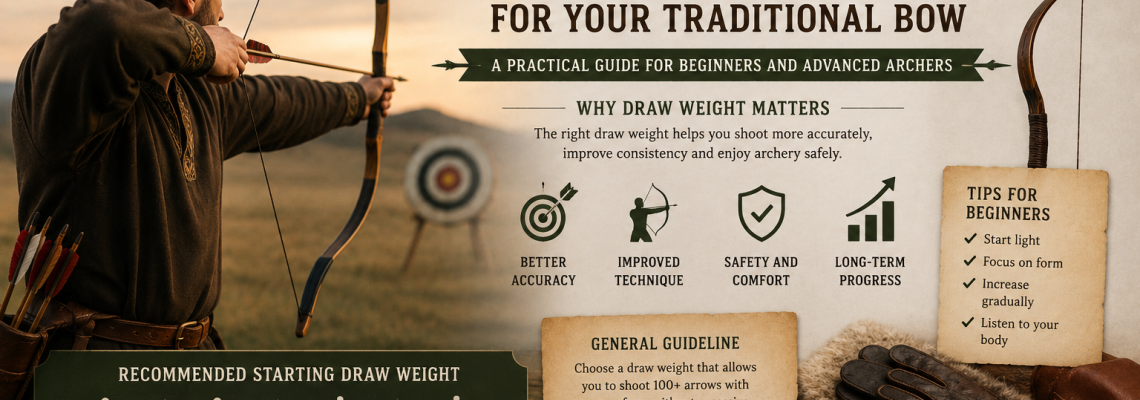
How to Choose the Right Draw Weight for Your Traditional Bow
Choosing the correct draw weight is one of the most important decisions when buying a traditional bow. The right bow should feel comfortable to draw, allow you to maintain good shooting technique, and match your experience and intended use.
Many beginners make the mistake of choosing a bow that is too powerful. A higher draw weight may look impressive, but it does not automatically make you a better archer. In fact, a bow that is too heavy can make it harder to develop good technique and enjoy regular practice.
In this guide, we explain what draw weight means, how to choose a suitable starting point, and what to consider before buying your traditional bow.
1. What Is Draw Weight?
Draw weight is the force required to pull a bowstring to a specified draw length. It is usually measured in pounds (lbs).
For example, a bow marked as 30 lbs requires approximately 30 pounds of force at the manufacturer's specified measuring point.
However, the marked draw weight does not tell the whole story. It is important to know the draw length at which the bow was measured. Many bows are rated at 28 inches, but this is not universal. Always check the manufacturer's specifications.
If you draw the bow farther than its reference draw length, the actual force you need to hold will generally increase. This means that a bow marked as 30 lbs may feel noticeably heavier if your personal draw length is longer.
2. Recommended Draw Weight for Beginners
If you are new to traditional archery, it is usually better to start with a manageable draw weight and focus on developing correct technique.
As a general starting point, many adult beginners find a bow in the 20–30 lbs range suitable. However, this is only a guideline. Your physical condition, previous experience, technique and intended practice frequency all matter.
Consider the following as broad orientation ranges, not strict rules:
Adult beginners: Around 20–30 lbs is a sensible starting range for many people.
Archers with some experience: Around 25–35 lbs may be suitable, depending on their technique and strength.
Experienced archers: Higher draw weights may be appropriate if they can draw and shoot comfortably with consistent form.
Teenagers and children: Choose a bow specifically suited to the archer's age, size, strength and experience. Do not select a bow based on age alone.
There is no single ideal draw weight for all men, women or young archers. Two people of the same age and body size may have very different strength levels and shooting experience.
If possible, try drawing a bow under the supervision of an experienced archer or instructor before making your decision.
3. Why You Should Avoid Choosing Too Much Draw Weight
A bow that is too heavy can make it difficult to maintain a controlled and repeatable shooting technique.
Common problems include:
Difficulty reaching your normal anchor point.
Shaking or struggling to hold the bow at full draw.
Poor posture and unnecessary muscle tension.
An inconsistent release.
Faster fatigue during practice.
Reduced accuracy and enjoyment.
The most important sign is whether you can draw the bow smoothly, reach your normal anchor point, hold it briefly under control, and release without changing your posture or technique.
If you have to strain, lean backward, lift your shoulder excessively or rush the shot, the draw weight may be too high.
A lighter bow is not a step backward. It can help you build a stronger technical foundation and practise for longer without unnecessary fatigue.
For more advice on avoiding beginner errors, read our guide to 10 Common Mistakes Beginners Make in Traditional Archery.
4. Your Draw Length Also Affects Draw Weight
One of the most important factors when selecting a traditional bow is your personal draw length.
The draw weight printed on a bow is measured at a specified draw length. If your natural draw length is longer than the manufacturer's reference measurement, the bow will generally feel heavier at full draw.
For example, a bow rated at 30 lbs at 28 inches may require more than 30 lbs of force at a longer draw length. The exact difference depends on the bow's design and draw-weight curve.
This is particularly important when choosing traditional horse bows, as some models are designed to accommodate longer draw lengths.
Before ordering, make sure you know:
Your approximate personal draw length.
The draw length at which the bow's draw weight is specified.
The maximum recommended draw length for the model.
Whether the bow is suitable for your intended shooting style.
You can find practical instructions in our article How to Measure Your Draw Length Correctly.
5. Choose Draw Weight According to Your Intended Use
Your shooting goals should also influence your choice. Different forms of traditional archery place different demands on the archer.
Recreational and Target Shooting
For regular recreational practice and target shooting, comfort and consistency should come first.
A moderate draw weight allows you to concentrate on your stance, anchor point, release and accuracy rather than struggling to hold the bow.
If you plan to practise for longer sessions, choosing a weight you can comfortably manage throughout the session is particularly important.
Traditional Archery Competitions
The appropriate draw weight depends on the competition format, its rules and your personal shooting style.
Do not assume that a heavier bow will automatically give you an advantage. Consistent technique and accurate shooting are more important than choosing the highest possible draw weight.
Always check the requirements of the competition you intend to enter.
Horse Archery
Horse archery often involves repeated shots, quick handling and consistent shooting under changing conditions.
For this reason, many horse archers prefer a draw weight they can manage comfortably and repeatedly. A bow that allows smooth, controlled shooting is generally more useful than one that is unnecessarily powerful.
Historical Reenactment
Some historical archers prefer heavier bows because of the equipment or historical context they want to represent.
If historical accuracy is important to you, research the specific bow type and intended use. However, your physical ability and safe handling should remain priorities.
6. Does the Type of Traditional Bow Matter?
Yes. Different traditional bow designs and individual models can have different draw characteristics. Two bows with the same marked draw weight may not feel identical when drawn.
Bow length, limb construction, materials, design and draw-weight progression can all influence the shooting experience.
At BowShop.eu, you can explore several traditional bow styles:
The most suitable choice depends on the specifications of the individual model, not just its historical name or appearance. Always check the available draw weights, recommended draw length and manufacturer's information before ordering.
If you are still comparing different bow styles, our article Hungarian vs Hun vs Mongolian Bows: Which Traditional Bow Should You Choose? explains some of their differences.
7. Choosing a Bow for Children and Junior Archers
Children and teenagers need a bow that matches their current physical development and experience.
A bow that is too heavy can make it difficult to learn the correct technique and may discourage a young archer from practising. It is not a good idea to buy a much stronger bow simply because the child is expected to grow.
When selecting a junior bow, consider:
The archer's height and physical strength.
Their natural draw length.
Their experience and ability to control the bow.
The manufacturer's recommended draw-weight range.
Whether the bow is designed specifically for younger archers.
You can explore our range of Children and Junior Bows.
8. Don't Forget the Arrows and Accessories
Choosing the correct draw weight is only one part of selecting suitable archery equipment.
Your arrows must also match the bow and your personal draw length. Arrow length, spine, weight and construction all influence how they behave when shot.
Using arrows that are too short or incorrectly matched can create safety problems and affect shooting performance.
You should also consider the basic protective equipment required for your shooting style, such as an armguard and finger protection.
Explore our selection of arrows and archery accessories, or consider one of our traditional bow sets if you prefer a convenient package.
9. Our Recommendation: Start with a Draw Weight You Can Control
If you are unsure which draw weight to choose, our recommendation is simple: start with a bow that you can draw smoothly and shoot with good technique.
You should be able to:
Draw the bow without excessive effort.
Reach your normal anchor point comfortably.
Maintain a stable posture.
Hold the bow under control.
Release consistently without rushing or straining.
It is better to practise regularly with a manageable bow than to struggle with a heavier one.
As your strength and technique develop, you can consider moving to a higher draw weight. There is no need to rush this process.
At BowShop.eu, we have been helping traditional archers choose their equipment for more than 20 years. We offer handcrafted bows from experienced Hungarian manufacturers, and every bow comes with a one-year warranty.
If you are uncertain about the right draw weight, draw length or model, feel free to contact us. We will be happy to help you find a bow that suits your needs.
Final Thoughts
Choosing the right draw weight is about finding the balance between comfort, control and your shooting goals.
Do not choose a bow simply because it has a higher poundage. Consider your physical ability, experience, natural draw length and the type of archery you want to practise.
A well-matched bow will help you develop good technique, enjoy your training and get much more out of traditional archery.
Explore the traditional bows at BowShop.eu and find the draw weight that is right for you.
Continue Your Traditional Archery Journey
If you are still deciding which bow is right for you, these resources may help:
- Hungarian Bows – Ideal for archers looking for a smooth draw and versatile performance.
- Hun Bows – Known for their speed, asymmetrical design, and historical significance.
- Mongol Bows – Excellent choice for horse archery and dynamic shooting.
- Avar Bows – One of the most popular traditional recurve bow designs.
- Traditional Bow Maintenance Guide – Learn how to protect your bow and maximize its lifespan.
- Hungarian vs Hun vs Mongolian Bows – Compare the most popular traditional bow styles side by side.
Whether you are a beginner or an experienced archer, choosing the right handcrafted bow will make your archery experience more enjoyable and rewarding.